
Eating Healthy: the Basics
1. What is a healthy breakfast?
2. What is a healthy lunch?
3. What is a healthy dinner?
4. How much should I weigh?
5. How many calories should I be eating?
6. What is the best way to lose
weight?
7. How can I keep my weight loss
goal in mind and stay motivated?
8. What is a healthy weekly weight loss?
9. How to set weight loss goals and make
them happen
10. How to keep a food diary, and
why it is essential to successful weight loss
11. Are all fats bad for you?
12. Are saturated fats bad
for you?
13. Are
unsaturated fats good for you?
14. Are carbohydrates bad for you?
15. Is fiber good for you?
16. How to read nutrition/food labels
17. How to plan your weekly menus
18. Why should I eat less salt?
19. What
do the sodium (salt) numbers mean on food labels?
20. What is The Mediterranean Diet?
21. Why eating vegetables is good for
you
22. Why eating fruit and nuts
is good for you
23. Why are cereals and whole grains good for you?
24. What are legumes, and why are they good for you?
25. Why is eating fish good for you?
26. Which fats and oils are good for
you?
27. Are dairy products good for you?
28. Which meats should I not eat?
29. Is drinking alcohol good for
you?
30. Is it important to measure your
ingredients?
31. Are snacks good for you?
32. How to choose the right portion size
33. Can you lose weight with a smaller
plate?
34. Eat healthier by cleaning out your
pantry
35. Which oils and fats should I keep in my pantry?
35. Which oils and fats are good for you - and when should I use them?
36. Which carbohydrates are good for you?
37. What is the best chicken or turkey for you?
38. Are dairy products good for you?
39. Which nuts and seeds should I eat?
40. Is red meat like beef or pork bad or good for you?
41. Is eating dessert good or bad for
you?
42. Is drinking soda bad for you?
43. Is drinking coffee bad for you?
44. How can healthy food taste good? Part 1
45. How can healthy food taste good? Part
2
46. How to eat healthy while eating
out
47. Are vitamins and supplements necessary
to eat healthy?
48. How to eat healthy while traveling
Eating Healthy: the Basics
Which oils and fats should I keep in my pantry?
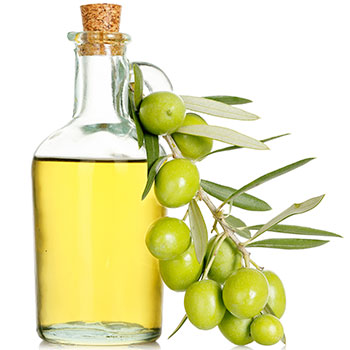
For years you have probably been told to eat a low fat diet or to not eat too much saturated fat. This is a great example of how science and our knowledge evolves. We now know that low fat diets are not healthier and are likely bad for you. There remains some controversy over whether a diet high in saturated fat is as bad for you as we once thought. While it does appear that too much saturated fat, especially from animal sources, is an issue, over the last five years we have come to realize more and more that it is the quality of the fat that is key. We get questions all the time at the DrGourmet.com website about when and how to use butter, which is the best oil for cooking, and how about fats for baking?
Saturation refers to the amount of hydrogen atoms that hang off of a fat molecule. More hydrogen atoms and the fat is "stickier," so saturated fats are more solid at room temperature. As a rule of thumb, animal fats like butter and lard are more saturated than fats that come from vegetable sources. There are some vegetable oils that are naturally more saturated, like coconut oil, and some oils are artificially saturated by adding hydrogen atoms. That process is known as hydrogenation and is how margarines and vegetable shortening are made. This is clearly a problem: too many hydrogenated fats in the processed foods on the market contribute significantly to the risk of diabetes and heart disease.
The most important fact to remember is that all oils and fats contain calories. For the most part, a measured teaspoon of any fat will have in the neighborhood of 35 to 50 calories. The difference between butter and olive oil will be the proportions of these fats - saturated vs. unsaturated - between the two. Butter is about 65% saturated fat, while olive oil is about 85% monounsaturated fat.
Monounsaturated fats have been clearly linked with lower rates of heart disease, stroke, and some cancers. Good examples of monounsaturated oils are vegetable oils like olive oil, canola oil, and grapeseed oil. Note that these three come from seeds. Both seeds and nuts are mostly made up of fats and you should think of them as fats even though they may also contain protein, fiber and carbohydrates. Like the oils that come from them, nuts are generally high in monounsaturated fats. Even though they're good fats, it's important to keep in mind that they contain a lot of calories.
There are some ingredients like avocados, eggs, and dairy products that most of us don't consider to be fats. Like seeds and nuts, avocados have the good types of fat (with a bonus of a lot of fiber).
One of the most common fats that many of us use is mayonnaise. There are a number of good quality reduced-fat products on the market. In Dr. Gourmet recipes I specify which should be used, based simply on which tastes best. Most salad dressings, for instance, will work fine with non-fat mayo. Try this first, and if it is not to your liking, the reduced-fat version should work great for you.
I like to use avocado as a replacement for mayonnaise wherever I can. It works terrific as a spread for sandwiches but also in recipes like tuna salad or egg salad (just be sure to add a bit of acid to keep the avocado from oxidizing and turning brown).
I generally keep the following fats and oils on hand. Usually I purchase smaller amounts because oils and fats tend to go bad quicker than you think.
1. Extra Virgin Olive Oil: Use EVOO for making your salad dressings and at the end of a recipe to finish a sauce. I don't generally cook with extra virgin olive oil because the temperature at which it burns (the smoke point) is comparatively low because of the particulate matter in the oil. Those olive oil solids that are part of the first pressing reduce the smoke point but they are also the source of a lot of the great antioxidants in the oil.
2. Olive Oil: I use a second pressing to cook with. It doesn't contain the particulate matter but is still full of flavor and with a higher smoke point - better for cooking.
3. Canola Oil: Canola oil is made from the refined oil from the rape seed. It is very high in monounsaturated fat, has a high smoke point and is mostly flavorless so a good choice for baking or those recipes where you don't want the taste of the oil to affect the final recipe.
4. Sesame Oil: I keep sesame oil on hand for my Asian dishes. You can use the dark or toasted sesame oil for a more intense flavor.
5. Unsalted Butter: I keep unsalted butter on hand for a number of reasons, but mostly I use it at the end of a recipe to enhance the flavor and texture. All it takes is a teaspoon or so at the end of a sauce to make a huge difference - a little bit goes a very long way.
Fat is a critical part of a healthy and a delicious life. The Mediterranean diet literature tells us that about 35% to 38% of our calories should be from fat, and keeping your focus mostly on vegetable sources of fat and less on animal sources is the key to great food that just happens to be great for you.