
Eating Healthy: the Basics
1. What is a healthy breakfast?
2. What is a healthy lunch?
3. What is a healthy dinner?
4. How much should I weigh?
5. How many calories should I be eating?
6. What is the best way to lose
weight?
7. How can I keep my weight loss
goal in mind and stay motivated?
8. What is a healthy weekly weight loss?
9. How to set weight loss goals and make
them happen
10. How to keep a food diary, and
why it is essential to successful weight loss
11. Are all fats bad for you?
12. Are saturated fats bad
for you?
13. Are
unsaturated fats good for you?
14. Are carbohydrates bad for you?
15. Is fiber good for you?
16. How to read nutrition/food labels
17. How to plan your weekly menus
18. Why should I eat less salt?
19. What
do the sodium (salt) numbers mean on food labels?
20. What is The Mediterranean Diet?
21. Why eating vegetables is good for
you
22. Why eating fruit and nuts
is good for you
23. Why are cereals and whole grains good for you?
24. What are legumes, and why are they good for you?
25. Why is eating fish good for you?
26. Which fats and oils are good for
you?
27. Are dairy products good for you?
28. Which meats should I not eat?
29. Is drinking alcohol good for
you?
30. Is it important to measure your
ingredients?
31. Are snacks good for you?
32. How to choose the right portion size
33. Can you lose weight with a smaller
plate?
34. Eat healthier by cleaning out your
pantry
35. Which oils and fats should I keep in my pantry?
35. Which oils and fats are good for you - and when should I use them?
36. Which carbohydrates are good for you?
37. What is the best chicken or turkey for you?
38. Are dairy products good for you?
39. Which nuts and seeds should I eat?
40. Is red meat like beef or pork bad or good for you?
41. Is eating dessert good or bad for
you?
42. Is drinking soda bad for you?
43. Is drinking coffee bad for you?
44. How can healthy food taste good? Part 1
45. How can healthy food taste good? Part
2
46. How to eat healthy while eating
out
47. Are vitamins and supplements necessary
to eat healthy?
48. How to eat healthy while traveling
Eating Healthy: the Basics
Why are cereals and whole grains good for you?
Whole Grains in the Mediterranean Diet
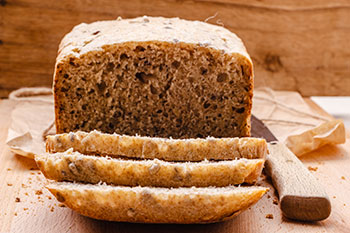
It's hard to walk through the grocery store without seeing packages labeled "whole grain" or "whole wheat." The truth is that these two statements mean the same thing, but often the claim of "whole grain" is far overblown. Producers can claim that a product contains whole grains if there is only a tiny amount. The best way to know is to look for the statement "100% whole wheat" or "100% whole grain" or check to see if the label has a Whole Grains Council official Whole Grains Stamp.
The Council defines and standardizes whole grain claims that manufacturers can subscribe to. Here's information and lists of products that bear the Stamp.
The research about eating more whole grains and cereals shows amazing benefits for your health. This appears to be the result of increased fiber intake for those adding more whole grains to their diet. In one study, men who ate more fiber had a far lower risk of weight gain: up to 48% lower for the highest intake of fiber. For women, the effect was not as dramatic, but those eating the most fiber still had a decreased risk of weight gain of 19%.
The benefits extend well beyond weight control, however, and eating more whole grains has been shown to lower total cholesterol and LDL (bad) cholesterol, reduce blood pressure, and prevent heart disease. The best part is that it doesn't take a major change: research shows that switching from white bread to only about 2 slices of whole grain bread per day had a major impact. That small change resulted in a 21% lower risk of heart attack. It appears that this may be that consuming whole grain products leads to reduced inflammation, but there may also be actual anti-inflammatory activity. (AJCN 2015;101:251-61)
It appears that consuming whole grains can make a significant difference in control of diabetes. Consuming whole grains reduces insulin release as well as lowering levels of fats, known as triglycerides, circulating in the blood. (Nutrition, Metabolism & Cardiovascular Diseases 2014;24:837-844) In other research, scientists found that those consuming 60 grams of whole grains per day were about one-third less likely to progress from normal blood sugars to prediabetes or from prediabetes to diabetes than people eating 30 grams per day or less. In their research, those who ate the most whole grains and had normal glucose tolerance at the start of the study were 27% less likely to develop prediabetes than those who ate the least. Those with prediabetes at the start of the study were 29% less likely to progress to diabetes. (AJCN 2013; 97:179-87)
As with most other foods changing your diet and consuming foods that have been processed as little as possible and this is most true with grains or cereals. If you are going to have cereal for breakfast, the more natural the cereal, the better. Oatmeal is better than shredded wheat or Cheerios, which are better than corn flakes. All of these are better than Frosted Flakes or Fruit Loops (but you already knew that). Look at the Nutrition Facts box and choose a cereal with higher fiber and lower sugar. A good target for fiber is over 9 grams per serving and less than 2 grams of sugar per serving.
When looking at other ingredients, remember that brown is better than white.
If you are used to eating white bread, make the transition slowly. You'll find "light" whole wheat breads in the grocery that taste great. They are not as high in fiber as regular whole wheat bread, but this is a great place to start moving yourself toward whole grain breads. Once you have made the transition you will find a wide variety of baked goods, including whole wheat hamburger buns, whole grain waffles, and whole wheat pizza crust.
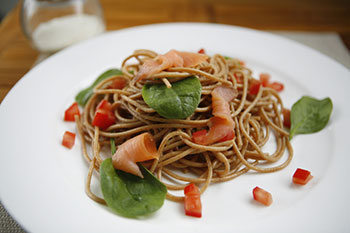
Whole wheat pasta is another easy change to make, and you'll find that it gives a whole new flavor to your pasta dishes. What's really interesting is that whole wheat pasta is actually the more authentic ingredient. Refining flour strips away the fiber and nutrients and is a relatively new creation. When all that goodness is taken away, so is most of the richness of flavor.
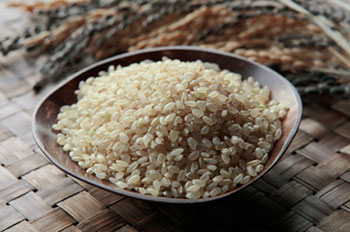
The same is true of brown rice. Like whole wheat pasta, this is one of the easiest changes to make to increase your fiber intake. Brown rice takes a little longer to cook and requires more water (generally about half again as much as when cooking white rice). Wild rice is another great choice, with tons of fiber, and even better, lots and lots of flavor. In almost any recipe that calls for rice you can also substitute bulgur wheat. It goes well in soups and is wonderful for making salads.
One of my favorite ways to get more whole grains is corn. Most folks don't think of corn as a whole grain, but it is - and you can always keep frozen corn on hand for when fresh is not in season. Soft corn tortillas are a great choice too, and most of the crispy corn taco shells you will find on the market will be low in sodium and fat but high in fiber. Snacking on popcorn is also a great way to increase your intake of whole grains.
You can see what a profound effect on your health the small and easy change of adding more whole grains to your diet can be. Look to include as many of these on your shopping list as you can, as these make perfect products for your cupboard or fridge.