Eating Healthy: the Basics
1. What is a healthy breakfast?
2. What is a healthy lunch?
3. What is a healthy dinner?
4. How much should I weigh?
5. How many calories should I be eating?
6. What is the best way to lose
weight?
7. How can I keep my weight loss
goal in mind and stay motivated?
8. What is a healthy weekly weight loss?
9. How to set weight loss goals and make
them happen
10. How to keep a food diary, and
why it is essential to successful weight loss
11. Are all fats bad for you?
12. Are saturated fats bad
for you?
13. Are
unsaturated fats good for you?
14. Are carbohydrates bad for you?
15. Is fiber good for you?
16. How to read nutrition/food labels
17. How to plan your weekly menus
18. Why should I eat less salt?
19. What
do the sodium (salt) numbers mean on food labels?
20. What is The Mediterranean Diet?
21. Why eating vegetables is good for
you
22. Why eating fruit and nuts
is good for you
23. Why are cereals and whole grains good for you?
24. What are legumes, and why are they good for you?
25. Why is eating fish good for you?
26. Which fats and oils are good for
you?
27. Are dairy products good for you?
28. Which meats should I not eat?
29. Is drinking alcohol good for
you?
30. Is it important to measure your
ingredients?
31. Are snacks good for you?
32. How to choose the right portion size
33. Can you lose weight with a smaller
plate?
34. Eat healthier by cleaning out your
pantry
35. Which oils and fats should I keep in my pantry?
35. Which oils and fats are good for you - and when should I use them?
36. Which carbohydrates are good for you?
37. What is the best chicken or turkey for you?
38. Are dairy products good for you?
39. Which nuts and seeds should I eat?
40. Is red meat like beef or pork bad or good for you?
41. Is eating dessert good or bad for
you?
42. Is drinking soda bad for you?
43. Is drinking coffee bad for you?
44. How can healthy food taste good? Part 1
45. How can healthy food taste good? Part
2
46. How to eat healthy while eating
out
47. Are vitamins and supplements necessary
to eat healthy?
48. How to eat healthy while traveling
Eating Healthy: the Basics
Are snacks good for you?
There is good research about snacking, and it seems most of us are one of two types. We are either sweet-snackers or salty/savory-snackers. About 10% of us are both and those who are like things that are both sweet and salty/savory at the same time (like kettle corn). Knowing which type of snacker you are can help you choose great quality snacks and also help you manage your weight by making sure you have snacks on hand that will be satisfying.
Research shows that those who are fruit lovers eat sweet snacks more often and those who are veggie lovers will choose salty or savory snacks. Knowing this lets you choose healthier options so you can keep your cupboard full of better choices that will satisfy you (Appetite 2006;47:107-110).
I am not a fan of snack foods, but if you are going to choose processed snacks there's good research to show that air can help you eat less. One example is the dense, crispy Cheetos vs. the puffed version. People eat fewer calories when they choose snacks like puffed Cheetos that take up a lot of volume and are less calorie dense (Appetite 2007:48;351-358). Popcorn is a good example of this. It makes a great snack and you'll find 100 calorie bags of microwave popcorn on the market. These are filling, satisfying, have a lot of fiber, and should be in every salty snacker's pantry. You don't have to use the 100 calorie popcorn packs. You can simply purchase plain popcorn, put it in a lunch-sized brown paper bag, and microwave for about a minute and ten seconds (recipe here).
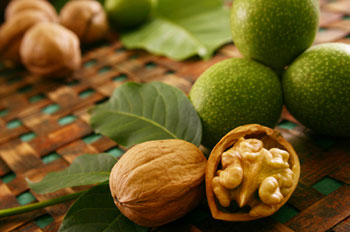
Nuts are a great choice if you are a salty/savory snacker. They're filling, stay with you, and are full of great monounsaturated fats. There are studies to show that eating nuts instead of carbohydrate-heavy snacks like Cheetos doesn't result in weight gain. This is true even when folks eat more calories by eating nuts (Am J Clin Nutr 2013;97:1346-55). We also know that eating nuts can help improve cholesterol profiles (Arch Intern Med 2010;170(9):821-827), and that pistachios actually have a tremendous impact, improving HDL (good) cholesterol levels by as much as 25%. (Nutr Met & Card Dis 2006(3)16:202-209) Keep almonds, peanuts, walnuts, pecans, and other nuts on hand for your snacks.
In another study, those eating peanuts as a snack (not actually nuts but a legume) ate fewer calories during dinner. Not by a little, but by up to 200 calories less. (doi:10.1155/2011/928352) The same approach is supported in other research looking at sweet snackers. In research comparing fruit and jelly beans, those eating berries consumed 20% fewer calories at their dinner meal than they did if they had the jelly beans (Appetite 2015,95:132-137).
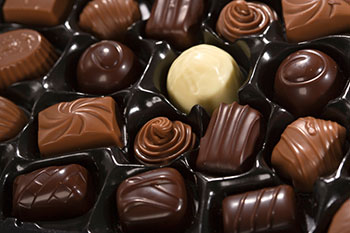
What about sweet snackers? Patients will often say to me, "I am addicted to chocolate." When I ask them about this, it becomes clear that the chocolate they are eating is not satisfying and they eat chocolate impulsively. The secret is to keep small portions of really great quality chocolate in your cupboard. It's also clear that sweet snackers are just as satisfied eating fruit as they are chocolate. In one study, women were asked to eat an apple, a piece of chocolate or nothing. They were given random instructions about when to eat their snack and then asked to record their mood afterwards. (Appetite 2006;46:332-336)
Their mood in the first minutes after their snack was essentially the same no matter what they ate. They were equally satisfied with the apple and chocolate (chocolate did have a slight edge). The moods they recorded were much different, however. After 90 minutes the women felt much guiltier for eating the chocolate than the apple. Interestingly, the apple resulted in the same feelings of guilt as eating nothing (which is to say, no feelings of guilt).
If you are a sweet snacker, keep your fridge full of fruit: apples, oranges, pears, grapes. Dried fruit is a great choice as well, and having raisins, apricots, etc. in your cupboard makes sense. This doesn't mean that you need to schedule every one of your snacks, but having the right snack available helps you keep from eating things that you might want to avoid. Snacking is important. You need to have something when you're hungry and having the right snack on hand makes this work for you.
Last Updated: October 12, 2015