
Eating Healthy: the Basics
1. What is a healthy breakfast?
2. What is a healthy lunch?
3. What is a healthy dinner?
4. How much should I weigh?
5. How many calories should I be eating?
6. What is the best way to lose
weight?
7. How can I keep my weight loss
goal in mind and stay motivated?
8. What is a healthy weekly weight loss?
9. How to set weight loss goals and make
them happen
10. How to keep a food diary, and
why it is essential to successful weight loss
11. Are all fats bad for you?
12. Are saturated fats bad
for you?
13. Are
unsaturated fats good for you?
14. Are carbohydrates bad for you?
15. Is fiber good for you?
16. How to read nutrition/food labels
17. How to plan your weekly menus
18. Why should I eat less salt?
19. What
do the sodium (salt) numbers mean on food labels?
20. What is The Mediterranean Diet?
21. Why eating vegetables is good for
you
22. Why eating fruit and nuts
is good for you
23. Why are cereals and whole grains good for you?
24. What are legumes, and why are they good for you?
25. Why is eating fish good for you?
26. Which fats and oils are good for
you?
27. Are dairy products good for you?
28. Which meats should I not eat?
29. Is drinking alcohol good for
you?
30. Is it important to measure your
ingredients?
31. Are snacks good for you?
32. How to choose the right portion size
33. Can you lose weight with a smaller
plate?
34. Eat healthier by cleaning out your
pantry
35. Which oils and fats should I keep in my pantry?
35. Which oils and fats are good for you - and when should I use them?
36. Which carbohydrates are good for you?
37. What is the best chicken or turkey for you?
38. Are dairy products good for you?
39. Which nuts and seeds should I eat?
40. Is red meat like beef or pork bad or good for you?
41. Is eating dessert good or bad for
you?
42. Is drinking soda bad for you?
43. Is drinking coffee bad for you?
44. How can healthy food taste good? Part 1
45. How can healthy food taste good? Part
2
46. How to eat healthy while eating
out
47. Are vitamins and supplements necessary
to eat healthy?
48. How to eat healthy while traveling
Eating Healthy: the Basics
Why are fruit and nuts good for you?
Fruit and Nuts in the Mediterranean Diet
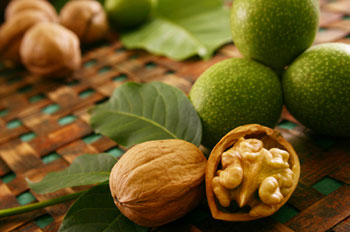
Nuts and seeds are great for you.
While nuts and seeds contain a lot of calories, they are the best quality calories and are high in unsaturated fats, especially monounsaturated fat. Nuts have been shown to be very satisfying and this makes them a great choice for snacking. Instead of potato chips or crackers, have nuts. There's great research that shows you won't gain weight eating the nuts, while eating potato chips is clearly linked with disease (Am J Clin Nutr 2006;83(2):284-90).
In one study researchers found that participants who were eating 5 or more 1-ounce servings of nuts per week were 26% less likely to die from any cause, including cardiovascular disease, cancer, or stroke. That's huge! Even more interesting is that those who reported eating just a little less - between 1 and 4 servings per week - reduced their risk of death by about 15%. (Am J Clin Nutr 2015;101(2):407-12)
In a follow up study using similar data, researchers found that compared to those who did not eat nuts at all, eating nuts (regardless of amount) made the participant 7% less likely to die of any cause. (NEJM 2013;369(21):2001-11) That may seem less than interesting, but look at what happens as the amount of nuts eaten each week increases:
Those who ate 1 ounce of nuts less than once a week were 11% less likely to die of any cause.
Those who ate 1 ounce of nuts 2 to 4 times per week were 13% less likely to die of any cause.
Those who ate 1 ounce of nuts 5 to 6 times per week were 15% less likely to die of any cause.
Those who ate 1 ounce of nuts 7 or more times per week were 20% less likely to die of any cause.
Even for those already following a Mediterranean Diet, increasing the amount of walnuts consumed has been shown to lower total and LDL (bad) cholesterol an extra 6% over their already healthy diet. Other studies on specific varieties of nuts show similar positive effects: I love pistachios, for example, and one study showed similar improvement in cholesterol profiles when participants ate 20% of their recommended calories in pistachios. Studies with walnuts and almonds show the same results.
One important study shows that nuts added to a Mediterranean Diet dramatically reduced the risk of developing metabolic syndrome (a grouping of conditions including diabetes, hypertension and high cholesterol).
People who snack on nuts tend to reduce the number of calories they eat at regular meals (J Nutr Met doi:10.1155/2011/357350). In another study of those already on a Mediterranean diet, adding walnuts resulted in an additional 4% decrease in total cholesterol. Research on almonds shows that adding 3 ounces of almonds per day for 9 weeks resulted in as much as a 10% drop in cholesterol. To make it even better, nuts and seeds are chock full of antioxidants and Vitamin E as well as magnesium, copper, plant sterols, protein, and fiber. In look at tree nuts - and specifically walnuts - a study showed that the more walnuts a woman ate, the lower her risk of developing type 2 diabetes. (J Nutr 2013;143(4):512-518)
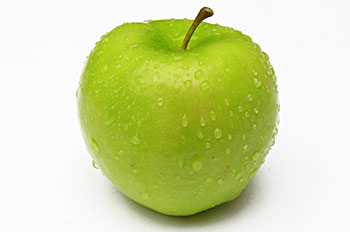
There is similar proof about the benefits of eating fruit. One of my favorite studies looked at whether an apple a day actually does keep the doctor away (Am J Clin Nutr 2002;76(3):560-68). Researchers in Finland were looking at the effect of diet and antioxidants on different diseases. They were trying to understand what types of antioxidants, such as flavonols and flavones, might offer protection against disease.
Their work showed that the more apples a person ate, the lower their risk of heart disease, diabetes, lung cancer and asthma. Another group showed the positive effects of apples against ongoing genetic damage. In both cases the researchers felt that it was the high antioxidant content in apples that made the difference.
I've written elsewhere about how great fiber is for you, and apples, like most fruit, have a lot of fiber. They have as much fiber as a slice of whole wheat bread, but only about 80 calories. This makes them the perfect snack. We know that people who fall into the "sweet snacker" category are a perfect match for fruit (Appetite 2006;47(1):107-10). One study showed that those folks who ate an apple were nearly as satisfied as when they ate a chocolate bar, but they felt much less guilty about eating the fruit.
In a very well designed study women eating fruit as snacks lost weight (an average of 2 pounds), while those women eating cookies gained a weight (about a pound, on average) (Appetite 2008;51(2):291-295).
Sweet and juicy, it's important to have your fridge full of apples, grapes, oranges, pears, and other fruit so you are prepared. Fresh fruit is a better choice than fruit juice because the fruit has been shown to be much more satisfying than drinking a glass of juice.
Have as much fruit every day as you want. Like veggies, it's hard to gain weight eating fruit. Have fruit with meals and for snacks when you're craving something sweet. Keep nuts on hand for the times that you want a more savory snack. There's no doubt that eating more of them (and less junk food) will help you be healthier.