
Special Diet Information
Coumadin® (Warfarin)
This recipe is safe for Coumadin (warfarin) users.
Lactose
This recipe contains cheese and some of those who are lactose intolerant may be able to tolerate it.
Sodium
This is NOT a low sodium recipe.
GERD / Acid Reflux
This recipe contains GERD triggers and those with GERD may wish to avoid it.
Gluten Sensitivity
This recipe is safe for those who are sensitive to gluten. Make sure the mayonnaise and yogurt are gluten-free.
"Lettuce is divine, although I'm not sure it's really a food." -Diana Vreeland, Editor
The refrigerator light goes on...
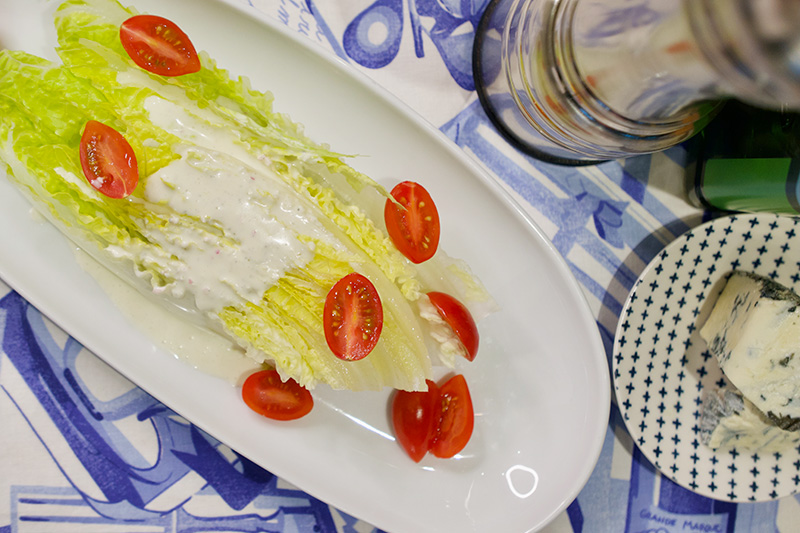
Blue Cheese Dressing is a classic and making your own is really worth the effort. This recipe is easy to make and super rich and creamy. Choose the best and most pungent blue cheese that you can find to maximize the flavor of this dressing. As always, the best ingredients make your recipes shine.
Blue Cheese Dressing
Servings: 4 | Serving size: 1/4 cup
Cooking Time: <30 Minutes (does not include chilling time)
This recipe can easily be multiplied and keeps well for about 4 - 5 days in the refrigerator.
Ingredients
- 1/2 cup low-fat buttermilk
- 1/4 cup reduced fat mayonnaise
- 1 ounce blue cheese (crumbled)
- 1 Tbsp shallot (finely minced)
- 1/4 tsp ground dry mustard
- 1 Tbsp white wine vinegar
Place all ingredients in a blender or mini chopper and blend until smooth.
Place the dressing in a storage container and refrigerate for at least an hour before serving.
Nutrition Facts
Serving size: 1/4 cup
Servings: 4
Amount Per Serving
| Calories 80 | Calories from Fat 54 |
| % Daily Value |
| Total Fat 6g | 7% |
| Saturated Fat 2g | 10% |
| Monounsaturated Fat 2g | |
| Trans Fat 0g | |
| Cholesterol 10mg | 3% |
| Sodium 260mg | 11% |
| Total Carbohydrates 3g | 0% |
| Dietary Fiber 0g | 0% |
| Sugars 2g | |
| Protein 3g |
| Vitamin A 2% | Vitamin C 0% |
| Calcium 6% | Iron 0% |
| Vitamin K 8mcg | Potassium 78mg |