
Special Diet Information
Coumadin® (Warfarin)
This recipe is NOT safe for Coumadin (warfarin) users.
Lactose
This recipe is safe for those who are lactose intolerant.
Sodium
This is a low sodium recipe.
GERD / Acid Reflux
This recipe contains GERD triggers and those with GERD may wish to avoid it.
Gluten Sensitivity
This recipe is safe for those who are sensitive to gluten.
Use gluten-free tamari sauce in this dish.
"When it comes to Chinese food I have always operated under the policy that the less known about the preparation the better. A wise diner who is invited to visit the kitchen replies by saying, as politely as possible, that he has a pressing engagement elsewhere." -Calvin Trillin, Writer
The refrigerator light goes on...
Some people like spicy food but not too spicy. This is literally the one pepper version of spicy and is pretty mild so it's easy to make this spicier by adding peppers to you desired level of heat.
One way to control how much spiciness in dishes like this one is to use chili oil. This is widely available now and very common in Asian markets but your grocery probably carries it.
Simply replace some of the oil that you use to stir fry with the chili oil. Start slowly at first - a half teaspoon for two servings may be enough for you. Each time you cook use a little more if you want more heat. It's great to have around and adds the flavor or a spicy chili pepper but you don't have to take the time to seed and mince.
Kung Pao Chicken
Servings: 4 | Serving size: 4 ounces chicken with vegetables and rice
Cooking Time: 60 Minutes
This recipe can easiliy be multiplied and makes great leftovers.
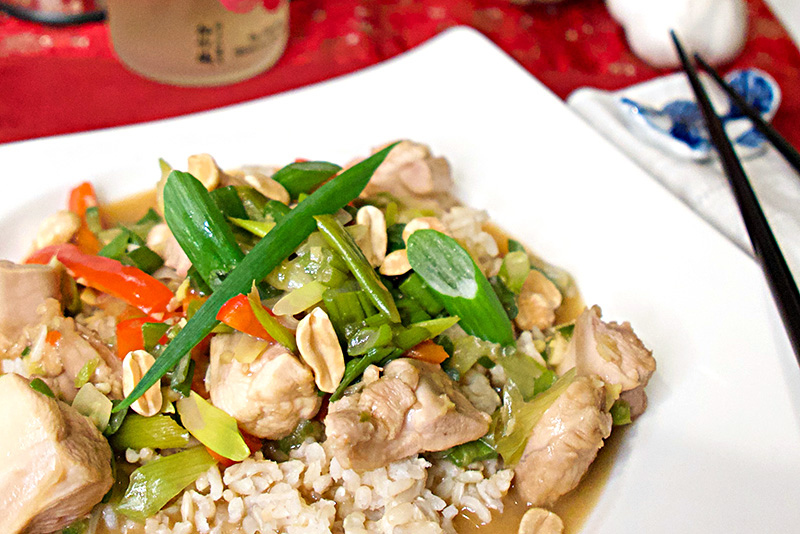
Ingredients
- 16 ounces boneless, skinless chicken thighs (cut into 1 inch cubes)
- 1 Tbsp. low-sodium soy sauce
- 1 Tbsp. sake or sweet white wine
- 1 Tbsp. rice vinegar
- 2 tsp. honey
- 1 Tbsp. cornstarch
- 4 cups water
- 1 cup brown rice
- 1 Tbsp. sesame oil
- 2 cloves garlic (minced)
- 2 Tbsp. ginger root (peeled and minced)
- 1 small red chili pepper or jalapeno (seeded and minced)
- 8 large green onions (sliced crosswise)
- 2 Tbsp. rice vinegar
- 5 tsp. reduced sodium soy or tamari sauce
- 3/4 cup no salt added vegetable stock
- 1 large red bell pepper (thinly sliced)
- 1/2 cup dry roasted peanuts (chopped coarsely)
Place the 2 teaspoons low-sodium soy sauce, sake, 1 teaspoon sesame oil and cornstarch in a bowl and stir until well blended.
Add the chicken breast cubes and toss until coated. Place the bowl in the refrigerator.
While the chicken is marinating place the water in a medium sauce pan over high heat.
When the water boils, stir in the rice.
Reduce heat to medium-low and simmer, partially covered, for about 45 minutes.
Do not boil away all of the liquid and do not stir the rice.
When a very small amount of liquid remains, remove the pan from the burner and let it stand, covered, for 5 minutes before serving.
After cutting the green onions separate the white and green part.
When the rice is done place a large skillet or wok over high heat.
Add the sesame oil and heat for a few moments.
Reduce the heat to medium and add the ginger, chili pepper and the white part of the green onions. Cook for about one minute.
Add the chicken and cook for about 5 minutes until browned on the outside.
Add the rice vinegar and soy sauce with the red bell pepper.
Cook the chicken tossing frequently.
When the chicken is nearly done fold in the green part of the green onion.
Serve over the rice and top with the peanuts.
Nutrition Facts
Serving size: 4 ounces chicken with vegetables and rice
Servings: 4
Amount Per Serving
| Calories 507 | Calories from Fat 171 |
| % Daily Value |
| Total Fat 19g | 24% |
| Saturated Fat 3g | 16% |
| Monounsaturated Fat 8g | |
| Trans Fat 0g | |
| Cholesterol 107mg | 36% |
| Sodium 463mg | 20% |
| Total Carbohydrates 52g | 19% |
| Dietary Fiber 6g | 19% |
| Sugars 7g | |
| Protein 32g |
| Vitamin K 110mcg |