
Special Diet Information
Coumadin® (Warfarin)
This recipe is NOT safe for Coumadin (warfarin) users.
Lactose
This recipe is safe for those who are lactose intolerant.
Sodium
This is a low sodium recipe.
GERD / Acid Reflux
This recipe contains GERD triggers and those with GERD may wish to avoid it.
Gluten Sensitivity
This recipe is safe for those who are sensitive to gluten.
"A man's nature runs either to herbs, or to weeds; therefore let him seasonably water the one, and destroy the other." -Sir Francis Bacon
The refrigerator light goes on...
White beans are a great base for salads. They bring so much to the recipe, including great texture, flavor, and fiber. It is almost crazy that they should be so good for you.
For this salad they combine perfectly with the shrimp and light mustard vinaigrette. This light summery salad has it all: legumes, veggies, seafood, monounsaturated fats, nuts, rich flavor, and sweet tomatoes.
The fresh oregano is an amazing addition but a lot of herbs will work. Try dill or a bit of fresh tarragon. If you are going to use dried herbs, 1/8 to 1/4 teaspoon of tarragon is fantastic.
Shrimp and White Bean Salad
Servings: 4 | Serving size: about 2 cups
Cooking Time: 30 Minutes | Chilling time: >60 minutes
This recipe can be multiplied or divided by 2 and makes great leftovers.
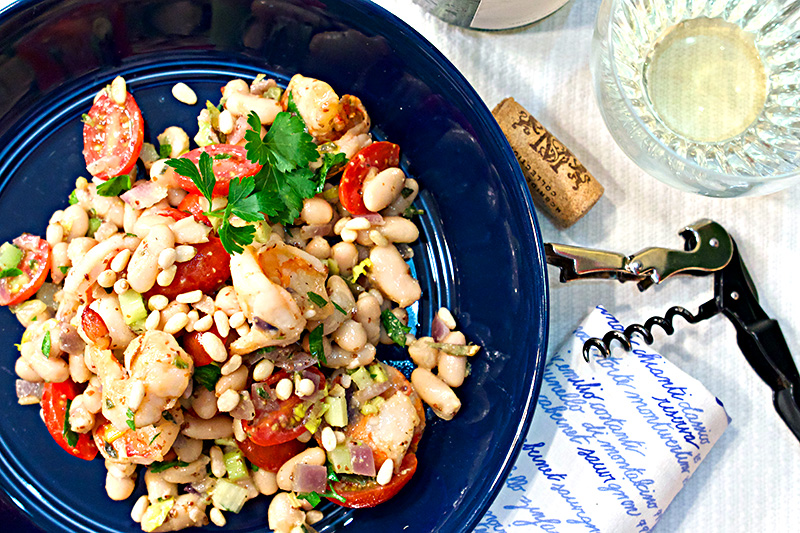
Ingredients
- 1 large red onion (diced)
- 1 tsp olive oil
- 1 lb shrimp (peeled, deveined and halved lengthwise)
- 2 15-ounce cans no salt added white beans (drained and rinsed)
- 1/2 tsp salt
- fresh ground black pepper to taste
- 2 Tbsp olive oil
- 1 Tbsp white wine vinegar
- 2 Tbsp pine nuts
- 2 tsp coarse ground mustard
- 2 large ribs celery (diced)
- 6 ounces grape tomatoes (halved)
- 2 Tbsp fresh oregano (coarsely chopped)
- 1 Tbsp parsley (coarsely chopped)
Place the olive oil in a large skillet over medium high heat.
Add the diced onion to the pan and cook for about 5 - 7 minutes until they just begin to soften. Remove to a large mixing bowl.
Add the shrimp and cook for about 5 minutes. Toss frequently.
When the shrimp turns firm and pink, add it to the bowl with the onion.
Add the white beans, salt, pepper, 2 tablespoons of olive oil, vinegar, pine nuts, and mustard to the bowl and toss well.
Place the salad in the refrigerator and chill for at least 40 minutes.
Add the celery, tomatoes, oregano and parsley. Toss well.
Chill well and then serve.
Nutrition Facts
Serving size: about 2 cups
Servings: 4
Amount Per Serving
| Calories 417 | Calories from Fat 108 |
| % Daily Value |
| Total Fat 12g | 15% |
| Saturated Fat 1g | 6% |
| Monounsaturated Fat 7g | |
| Trans Fat 0g | |
| Cholesterol 183mg | 61% |
| Sodium 491mg | 21% |
| Total Carbohydrates 41g | 15% |
| Dietary Fiber 10g | 37% |
| Sugars 3g | |
| Protein 37g |
| Vitamin K 40mcg |