
Special Diet Information
Coumadin® (Warfarin)
This recipe is safe for Coumadin (warfarin) users.
Lactose
This recipe is safe for those who are lactose intolerant.
Sodium
This is NOT a low sodium recipe.
GERD / Acid Reflux
No specific GERD triggers.
Gluten Sensitivity
This recipe is safe for those who are sensitive to gluten.
"The greatest drawback is the way in which it is necessary to eat it. It looks awkward enough: but what is to be done? Surrendering such a vegetable from considerations of grace is not to be thought of." -Harriet Martineau, an Englishwoman writing about corn on the cob in 1835
The refrigerator light goes on...
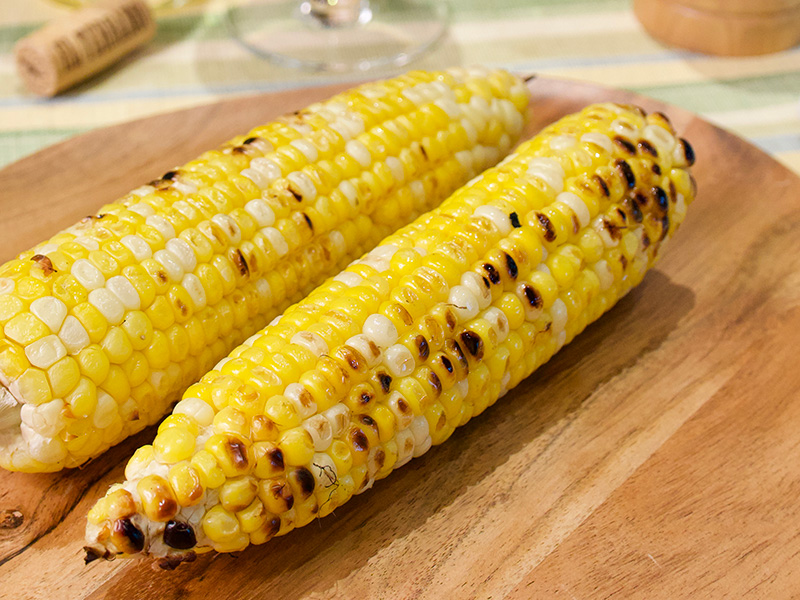
This recipe includes the pat of butter for your corn on the cob because it just wouldn't be corn without it. Take the pat and enjoy it. This recipe works well both on the grill and in the oven. The grill will give the corn a lovely charcoal flavor.
Roasted Corn on the Cob
Servings: 2 | Serving size: 1 ear corn
Cooking Time: 45 Minutes
This recipe can easily be multiplied or divided by 2. I love leftover corn. Leave it wrapped in the husks inside the foil.
Ingredients
- 2 ears corn
- 1/8 tsp pepper
- 1/4 tsp salt
- 2 tsp unsalted butter
Preheat the oven to 400°F.
Peel the husk back from the corn, being careful not to detach them from the stem. Remove silks and rinse well, wetting down the husks.
Sprinkle the salt and pepper over the corn.
Fold the husks against the corn and wrap in foil.
Roast in the oven for about 30 minutes. Turn them 1/4 turn about every 7 - 8 minutes.
Remove from the oven and unwrap the foil. Cut the bottom of the cob so that the husks fall away easily.
Serve each with a pat of butter.
These can also be roasted on top of the grill. The heat should be medium to medium-high and you must turn them frequently, as noted above.
Nutrition Facts
Serving size: 1 ear
Servings: 2
Amount Per Serving
| Calories 160 | Calories from Fat 54 |
| % Daily Value |
| Total Fat 6g | 7% |
| Saturated Fat 3g | 14% |
| Monounsaturated Fat 1.5g | |
| Trans Fat 0g | |
| Cholesterol 10mg | 3% |
| Sodium 320mg | 14% |
| Total Carbohydrates 27g | 10% |
| Dietary Fiber 3g | 10% |
| Sugars 9g | |
| Protein 5g |
| Vitamin A 5% | Vitamin C 11% |
| Calcium 0% | Iron 4% |
| Vitamin K 1mcg | Potassium 400mg |