
Special Diet Information
Coumadin® (Warfarin)
This recipe is NOT safe for Coumadin (warfarin) users.
Lactose
This recipe is safe for those who are lactose intolerant.
Sodium
This is a low sodium recipe.
GERD / Acid Reflux
This recipe contains GERD triggers and those with GERD may wish to avoid it.
Gluten Sensitivity
This recipe is safe for those who are sensitive to gluten.
"Parsley - the jewel of herbs, both in the pot and on the plate." - Albert Stockli, Chef
The refrigerator light goes on...
Pretty much every culture has their version of the green sauce. Pesto in Italy, Salsa Verde in Spain, Chimichurri in Argentina. This Georgian cilantro sauce recipe is also known as Niortskali. There are a lot of variations but the basic ingredients, as with a lot of green sauces, are cilantro, parsley, garlic and oil.
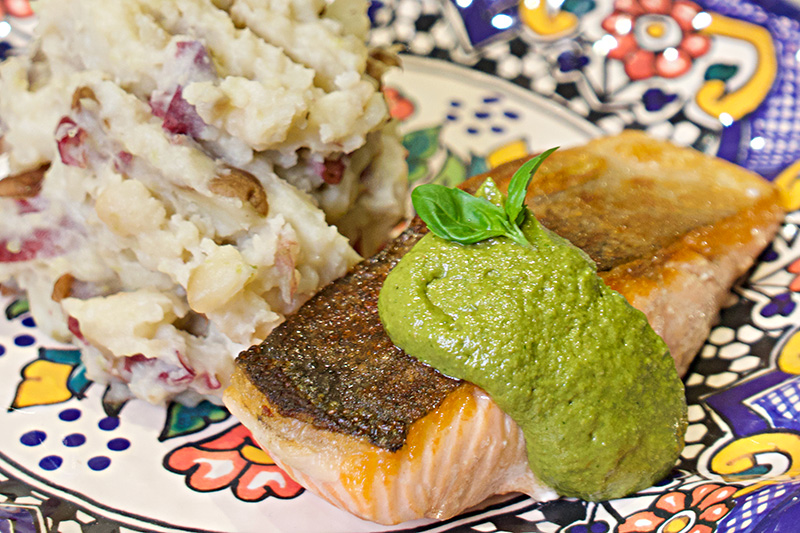
The difference with this sauce is the apricots. The traditional Georgian recipes will use an apricot "leather" which is similar to a fruit roll-up. Dried apricots will work well, but soaking them makes all the difference and soaking them overnight is worth the extra step. Unlike a pesto or salsa verde with a more textured mouthfeel, the apricots give this sauce both a silky sweetness and a rich creamy texture. It is perfect served on pork or flavorful fish like salmon or mackerel.
Georgian Cilantro Sauce
Servings: 12 | Serving size: 3 tablespoons sauce
Cooking Time: 30 Minutes
This recipe can easily be multiplied. This recipe keeps well for about 5 days in the refrigerator and goes really well on sandwiches.
Ingredients
- 1 quart water
- 1/4 pound dried apricots
- 2 ounces walnuts
- 2 cups cilantro leaves and stems
- 1 cup curly parsley
- 16 large leaves fresh basil
- 1 tsp. fresh tarragon
- 1/2 tsp. salt
- to taste fresh ground black pepper
- 2 cloves garlic
- 1/4 small white onion
- 1/2 lemon (juiced)
- 2 Tbsp. olive oil
Place the water in a small pot over high heat. Add the apricots.
When the water boils let the apricots cook for one minute.
Remove from the heat and place the apricots in a bowl.
Use about 1 cup water to cover the apricots in the bowl.
It's best to let the apricots soak overnight but they need at least 3 hours.
After the apricots have soaked place them in a blender with the liquid that is in the bowl.
Add the walnuts, cilantro, parsley, basil, tarragon, salt, pepper, garlic, onion, lemon juice and olive oil.
Puree until smooth.
Nutrition Facts
Serving size: 3 tablespoons sauce
Servings: 12
Amount Per Serving
| Calories 80 | Calories from Fat 45 |
| % Daily Value |
| Total Fat 5g | 7% |
| Saturated Fat 0.5g | 3% |
| Monounsaturated Fat 0g | |
| Trans Fat 0g | |
| Cholesterol 0mg | 0% |
| Sodium 105mg | 5% |
| Total Carbohydrates 7g | 3% |
| Dietary Fiber 1g | 5% |
| Sugars 5g | |
| Protein 1g |
| Vitamin A 5% | Vitamin C 10% |
| Calcium 0% | Iron 4% |
| Vitamin K 90mcg | Potassium 200mg |