
Special Diet Information
Coumadin® (Warfarin)
This recipe is safe for Coumadin (warfarin) users.
Lactose
This recipe is safe for those who are lactose intolerant.
Sodium
This is a low sodium recipe.
GERD / Acid Reflux
No specific GERD triggers.
Gluten Sensitivity
This recipe is safe for those who are sensitive to gluten.
"A satisfied customer-we should have him stuffed!"
-Basil Fawlty, Owner, Fawlty Towers
The refrigerator light goes on...
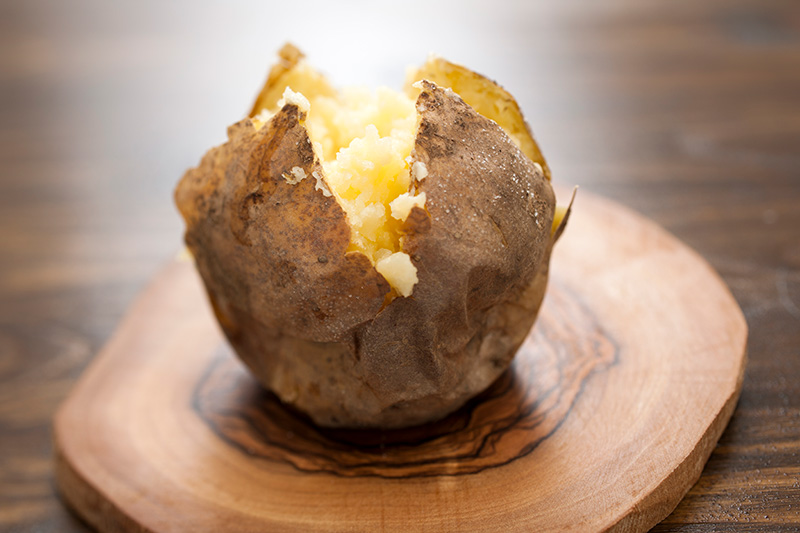
I do love baked potatoes. They're so simple but so many different ways to cook them. The main decision is whether to wrap or not. Foil traps the moisture and the potato steams along with baking making for a moister flesh. I prefer to not wrap potatoes and bake them unwrapped. The skin turns out crispy and the flesh fluffier I feel.
Idaho potatoes are the best for baking. You can bake waxy potatoes like Yukon gold or red potatoes but they will not have the same fluffiness as Idahos. If you are in a hurry, the microwave will cook your potato but these dry out too much. You can cook it for 2 minutes on high prior to putting the potato in the oven and it will preheat the potato and shorten the cooking time by about 10 minutes.
Of course, the Nutrition Facts don't include what you put on top of your potato. Loading it down with butter will add a lot of calories. I like a little bit of salt and pepper with sour cream and maybe some grated cheddar cheese.
Plain Baked Potato
Servings: 1 | Serving size: 1 6-ounce potato
Cooking Time: 45 Minutes
This recipe can easily be multiplied. Leftover baked potatoes are great in salads, or reheat gently.
Ingredients
- 1 6-ounce Idaho potato
Preheat the oven to 325°F.
Scrub the potato and place in the oven. Bake for 30 to 40 minutes until the potato gives slightly when you squeeze it.
Nutrition Facts
Serving size: 1 6 ounce potato
Servings: 1
Amount Per Serving
| Calories 156 | Calories from Fat 2 |
| % Daily Value |
| Total Fat 0g | 0% |
| Saturated Fat 0g | 0% |
| Monounsaturated Fat 0g | |
| Trans Fat 0g | |
| Cholesterol 0mg | 0% |
| Sodium 17mg | 1% |
| Total Carbohydrates 36g | 12% |
| Dietary Fiber 4g | 15% |
| Sugars 2g | |
| Protein 4g |
| Vitamin A 0% | Vitamin C 27% |
| Calcium 3% | Iron 10% |
| Vitamin K 3 mcg | Potassium 899 mg |
| Magnesium 47 mg | |