
Beef Recipes
Beef
Bourguignon
Meatballs
London
Broil with Mushrooms Sauteed in Bourbon
Tenderloin
with a Merlot Blackberry Reduction
Skirt Steak with Sauteed Mushrooms
All Beef Main Course Recipes
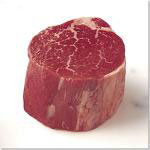
Beef tenderloin
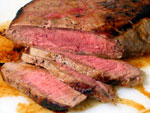
London broil flank steak.
Ingredient Information
Beef
Beef is okay for you but best in my opinion to not to eat it more than about once a week. It is the amount of fat in beef that you want to keep an eye on and choosing lean beef is the key. I try to keep my choices under 10 grams of fat with less than 4 grams of saturated fat in a four ounce serving. A lot of grocery stores will have this nutrition information listed or available but they don’t have to. If you want to know about any particular cut of beef the best internet resource to look up information is the USDA Nutrient Database.
There is a wide variety of quality of beef on the market today and discussion of that is beyond the scope of this column. As with all products the higher quality usually dictates a higher price. I personally look for beef that is labeled as not having been fed anything but an all vegetable diet (cows are vegetarians after all). I prefer to purchase beef that claims to have no added hormones or any antibiotics used. Such measures are a little more costly but given that I don’t eat beef that often I feel that it’s worth the added money. There is no standard for labeling when it comes to such claims and you simply have to trust the market where you buy your meats.
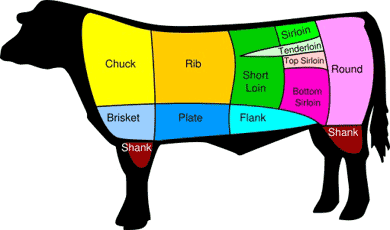
Leaner meats come from the loin and the leanest and most tender section is the tenderloin. There are a number of tenderloin cuts to choose from. At the smaller end are the tournedos (or medallions) and the center is filet mignon. These steaks are most often pan fried or grilled. At the head is the Chateaubriand, which is usually roasted and is large enough for three to four servings.
When you shop for tenderloin it will most often be for filet steaks. A lot of butchers will “prepare” these for you by tying a string around the filet. This is often because they have taken two (or sometimes three) smaller bits of filet and tied them together to look like a larger steak. If the steak is tied you should be suspect and ask them to cut your steak properly.
4 ounces lean beef tenderloin = 189 calories, 10 g fat, 4 g sat fat, 4 g mono fat, 23 g protein, 0 g carbohydrates, 60 mg sodium, 69 mg cholesterol, Vitamin K 0 mcg
Flank steak is one of my favorite cuts and has only about six grams of fat in each serving. It is less tender than some cuts because it comes from an area that gets more muscular action but marinated and cooked quickly over high heat it makes for a truly succulent steak. Flank steak also works well in stews because it tenderizes quickly during the stewing process.
4 ounces lean beef flank steak = 158 calories, 6 g fat, 2 g sat fat, 2 g mono fat, 24 g protein, 0 g carbohydrates, 62 mg sodium, 37 mg cholesterol, Vitamin K 1 mcg
Skirt steak is a great cut. It’s from the same area as the flank steak but is actually the diaphragm muscle. It is more marbled with fat than flank steak and makes for a fantastic dinner. I love it simply pan seared until just medium rare.
4 ounces lean beef skirt steak = 186 calories, 9 g fat, 4 g sat fat, 5 g mono fat, 24 g protein, 0 g carbohydrates, 76 mg sodium, 65 mg cholesterol, Vitamin K 0 mcg
I don’t buy ground beef very much and don’t use it in very many of my recipes. I generally prefer to choose a cut of beef that is leaner and grind it myself using the food processor (see top round below). This lets me control the amount of fat because I am able to trim the beef as lean as possible before grinding. If you are going to buy ground beef, purchase the leanest you can find. The more red looking it is the better because the higher fat content will make the ground beef look pinker.
I find it funny that sellers are allowed to label their beef 80% lean or 90% lean. You have to subtract this from 100 to get the fat content (20% fat for the 80% lean ground beef). Most groceries carry 90% lean and even higher now and this is your best choice. It might be labeled “Extra Lean” (see Food Labels No. 1 for an explanation of the meanings of Lean and Extra Lean).
4 ounces extra lean ground beef = 153 calories, 5 g fat, 2 g sat fat, 2 g mono fat, 24 g protein, 0 g carbohydrates, 74 mg sodium, 69 mg cholesterol, Vitamin K 0 mcg
Top round is often sold as “London Broil” although traditionally London Broil recipes use flank steak. Cuts from the round are lean and muscular coming from the hip of the cow. I will use this cut for London Broil but only in a pinch. Mostly I use top round for stews. It also makes for terrific lean beef for grinding.
4 ounces lean top round = 159 calories, 5 g fat, 2 g sat fat, 2 g mono fat, 26 g protein, 0 g carbohydrates, 65 mg sodium, 74 mg cholesterol, Vitamin K 1 mcg
Related Articles
Yes, You Can Eat Red Meat (Just Not Every Day)
My patients are always saying that they can't eat healthy because they like to eat red meat. Well, I like eating a good steak as much as the next person and I do. I don't eat red meat that often ' probably about 5 times a month or so. I do eat leaner cuts and Dr. Gourmet recipes reflect these healthier choices.
Portion Size
You read every day that there has been a dramatic increase in the size of portions. Everything from fast food to candy has been "supersized" in the last 30 years. The good news is that there are also a lot of great ingredients that have been produced with less fat and fewer calories. By using those foods and combining them with the right portion size it's easy to eat healthy.
Dietary Fat and the Risk of Alzheimer's Disease
It has become clearer and clearer that diets high in saturated fat and trans fats are associated with health problems. I have written about many different research studies that link diets high in these types of fats with heart disease and stroke. Recently, however, a very well designed study shows a clear connection between Alzheimer's Disease and an increased intake of saturated and trans fat.
Red Meat and Breast Cancer in Women
There have been links to an increased risk of cancer in those who eat higher amounts of red meat. So far this has not been shown in women with breast cancer, however. In a study published this week a group of researchers looked at a large number of women to determine if this might be the case.
Habits of normal-weight people
Researchers in Austin, Texas reported recently on the observed differences in dietary habits between 52 normal-weight people and 52 overweight people of the same sex, age, and height.
Red meat still not bad for you
Older studies have linked eating more red meat with a higher risk of heart disease and type 2 diabetes. But is it the red meat itself, the higher saturated fat that's associated with red meat, or something else? Other studies have suggested that the culprit might be increased inflammation due to a higher level of blood iron. On the other hand, for those who have normal iron levels, changing the amount of red meat intake has been shown to have little effect on blood iron levels.