Chef Tim Says...
| Salad in a Jar Construction Kit | 08/03/20 |
| Cooking: the real aromatherapy | 05/18/20 |
| Get Started Cooking with Stews | 01/09/20 |
| Paella | 07/16/18 |
| How to make your own shrimp stock | 10/09/17 |
| All "Chef Tim Says..." Columns | |
Dr. Tim Says...
| Not So Magic Rice | 04/09/18 |
| Leaky Gut Syndrome Quackery | 10/02/17 |
| 4 ways to protect your brain with diet | 07/18/17 |
| Chicken skin: to eat, or not to eat | 06/19/17 |
| Change is here | 06/12/17 |
| Medical technology | 03/27/17 |
| All "Dr. Tim Says..." Columns | |
Dr. Tim Says....
Vitamin D in Foods
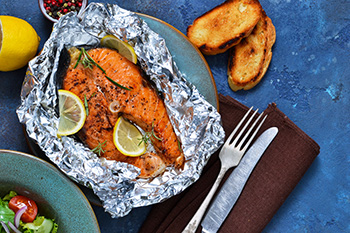
There is mounting evidence that many of us are increasingly deficient in Vitamin D. While there is some controversy about the health impact of this, it seems that changes in our diet in the last few years towards fewer foods rich in Vitamin D has led to a much lower intake. Likewise, with the recommendations on avoiding the sun and wearing sunscreen while in the sun to prevent skin cancer we end up with less available Vitamin D (contact with the sun activates our own bodies manufacture of Vitamin D).
The longstanding recommendations of 200 to 400 International Units (IU) may not be adequate according to some research. There is not consensus, however, on whether Vitamin D supplements are as effective as natural sources. The skin produces about 10,000 IU Vitamin D in response 20 to 30 minutes of summer sun exposure. This is going to vary somewhat depending on latitude, the time of year, time of day, cloudiness, etc.. Consequently, there are some scientists who believe that mild sun exposure is acceptable and the risk of skin cancer is outweighed by the benefit of preventing other diseases. (www.pnas.org cgi doi 10.1073 pnas.0710615105)
All of this arises out of research showing a link between low Vitamin D levels in the blood and heart disease, cancers and other illness including diabetes and osteoporosis. Talking about Vitamin D is clearly a good topic for you to discuss with your physician regarding the risk vs. benefit for you of taking Vitamin D supplements or spending limited, controlled time in the sun. Vitamin D is fat soluble meaning that the body absorbs it and holds on to it along with fat stores. Consequently, you can easily overdose on Vitamin D supplements.
Getting enough Vitamin D in your diet is possible and goes along with Mediterranean style diet. The easiest way is to eat more fish. Fatty fish like tuna, salmon, herring and sardines contain high amounts of Vitamin D. Here is a list of foods high in Vitamin D:
| Food | IUs per serving* |
| Herring (200 calories) | 2061 |
| Catfish(200 calories) | 1053 |
| Oysters (200 calories) | 941 |
| Salmon (sockeye), cooked (3 ounces) | 794 |
| Trout (200 calories) | 760 |
| Halibut (200 calories) | 645 |
| Sardines (200 calories) | 516 |
| Mackerel, cooked (3 ounces) | 388 |
| Shrimp (200 calories) | 287 |
| Tuna fish, canned in water, drained (3 ounces) | 154 |
| Milk, vitamin D-fortified, (1 cup) | 115-124 |
| Orange juice fortified with vitamin D (1 cup) | 100 |
| Yogurt, fortified with 20% of the DV for vitamin D (1 cup) | 80 |
| Sardines, canned in oil, drained, 2 sardines | 46 |
| Liver, beef, cooked (3.5 ounces) | 46 |
| Ready-to-eat cereal, fortified with 10% of the DV for vitamin D (0.75 to 1 cup ) | 40 |
| Egg (1 whole) | 25 |
| Mushrooms (1 cup) | 16 |
| Cheese, Swiss (1 ounce) | 6 |
Choosing fortified foods is a good strategy as you can see. Enriched milk, cereals and yogurt are good choices. The key is great quality fresh food that can help you get enough Vitamin D and here are some Dr. Gourmet recipes to help get you started:
Fegato Alla Toscana
Seared Halibut with Basil Oil
Roasted Salmon with Corn Relish
Fish Enchiladas
Indian Shrimp Curry
Shrimp with Olives
Timothy S. Harlan, MD, FACP, CCMS
Dr. Gourmet
May 31, 2010
Last updated: 02/26/19