
Chef Tim Says...
| Salad in a Jar Construction Kit | 08/03/20 |
| Cooking: the real aromatherapy | 05/18/20 |
| Get Started Cooking with Stews | 01/09/20 |
| Paella | 07/16/18 |
| How to make your own shrimp stock | 10/09/17 |
| All "Chef Tim Says..." Columns | |
Dr. Tim Says...
| Not So Magic Rice | 04/09/18 |
| Leaky Gut Syndrome Quackery | 10/02/17 |
| 4 ways to protect your brain with diet | 07/18/17 |
| Chicken skin: to eat, or not to eat | 06/19/17 |
| Change is here | 06/12/17 |
| Medical technology | 03/27/17 |
| All "Dr. Tim Says..." Columns | |
Chef Tim Says....
Peppers
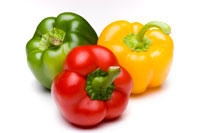
Twenty years ago it was rare to find much more than a green bell pepper in grocery stores. The sweet or bell pepper is a member of the Capsicum family, making them a cousin to chili peppers such as jalapenos and habaneros. Red bell peppers are simply green peppers that have been allowed to ripen on the vine longer and are, consequently, sweeter. Yellow, orange and purple varieties are widely available now as well, each with subtly different flavors.
|
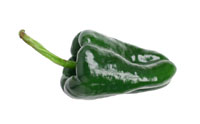
Poblanos range from very dark green to almost black. They are mildly spicy with a heat index of mild to medium. The darker pepper has a more intense flavor. As poblano peppers mature they turn a reddish brown. Dried poblanos are known as Ancho chilis.
Look for peppers that are firm to the touch and have no dark spots or obvious bruising. One sign of a pepper that is not fresh is when there are small pits in the skin.
Interestingly, green bell peppers have twice the amount of vitamin C as oranges and red or yellow bell peppers have 4 times as much.
|
To roast peppers, start by setting the oven on broil. Wash the peppers and place them in the oven about 4 to 6 inches under the broiler. Check on them every two minutes or so, turning them one quarter turn at a time until they are well charred on the outside. You can do this over the burner or grill but I find that you have to be more careful than with the broiler.
When the pepper is well charred remove it from the oven and place in a paper bag. Close the bag and allow the pepper to cool completely. The skin will then slip off easily and once sliced open it is seeded just as easily.
One time I was doing a demonstration of a recipe using roasted peppers and the host asked if he could use bottled red peppers. The answer is yes. While some are packed in oil, most are packed in water with a little vinegar. Either way, they rarely have much, if any, salt. I have tested recipes with fresh and bottled peppers and there is a difference in the fresh roasted flavor not coming through as well with the bottled peppers, but overall they are really good. I have also used bottled roasted yellow peppers with similar results.
|
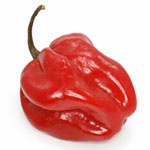
There are dozens of hot peppers available to you, and if you are so inclined, there are even hot pepper societies for the appreciation of these spicy delicacies. Dr. Gourmet recipes generally call for milder types like anchos, chipotles and jalapenos.
Chipotles are actually jalapeno chilis that have been smoked and dried. The intense flavor is spicy and has lovely undertones of smoke, chocolate and sweet peppers. If the peppers are not going to cook for very long, I will often soften them by steaming for about ten minutes.
Usually found in markets, dried chipotles are also sold packed in cans in adobo, which is a spicy sauce made of vinegar, dried chili peppers, herbs and spices
|
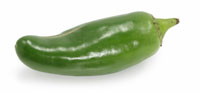
The heat of chili peppers is measured in Scoville units, a scale that was invented by Wilbur L. Scoville in 1912. He based this on the number of parts of sugar water that it would take to dilute the extract of chilies to the point that there is a barely detectable burn. While this seems a bit obsessive for my taste, pretty much anything over 5,000 scoville units is hot (let alone the sauces and peppers that advertise themselves as being 10, 20 or 100 times that hot).
Practically speaking, you will find only a handful of pepper types in a typical grocery store. The most common in the U.S. markets (from mild to hot) are:
Mild (1,000 – 2,000
scoville units)
Poblano
Ancho (smoked poblano)
Medium to hot (2,000 – 5,000
scoville units)
Jalapeno
Chipotle (smoked jalapeno)
Serrano
Very Hot (1,000,000 – 3,000,000
scoville units)
Scotch Bonnet
Habanero
Thai
4 ounces peppers = 30 calories, 0g fat, 0g sat fat, 0g mono fat, 1g protein, 7g carbohydrates, 3mg sodium, 0mg cholesterol
Dr. Gourmet
February 4, 2008