
It's easy to get answers about health and nutrition! Just send your question by email to [email protected] and Dr. Harlan will respond to selected questions of general interest. Answers will be posted in the Ask Dr. Gourmet newsletter (sign up now!) and archived in the Ask Dr. Gourmet section of the website.
Please note that the Ask Dr. Gourmet feature is restricted to questions regarding food and nutrition. Due to the many questions we receive, not all questions may be answered. For more specific questions about your individual health, please contact your doctor. About Timothy S. Harlan, MD, FACP, CCMS | Terms of Use | Privacy Policy
The Dr. Gourmet Low Sodium Diet
Following a Low Sodium Diet Can Be Delicious!
The Dr. Gourmet website has extensive information on following a low sodium diet along with hundreds of low-sodium recipes. The Low Sodium Diet: Guide and Cookbook collects that guidance as well as a selection of popular low-sodium recipes in a convenient guide. Reducing your salt intake doesn't have to mean bland, boring food.
This guide, written by physician and chef Timothy S. Harlan, MD, includes:
• Reliable information based on sound science about the effects of salt on your heart and health
• 80+ delicious low sodium recipes
• Ingredient and cooking tips throughout the book
• Complete Nutrition Facts for each recipe
Now Available! Paperback: $19.95 + s/h | PDF: $14.95
Ask Dr. Gourmet
Are salt substitutes as bad as eating too much salt?
I was told to go on a low salt diet. Are the salt substitutes a good alternative, or are they just as bad for you?
Dr. Gourmet Says...
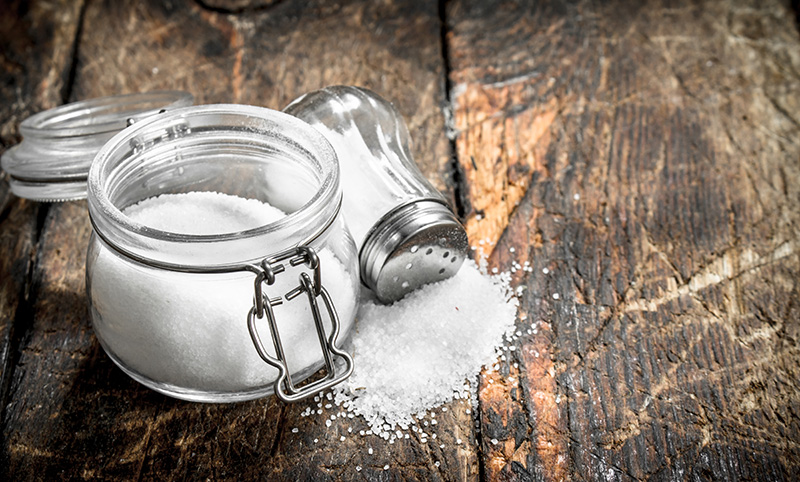
There are a lot of different salt substitutes on the market, and you can find these in the same aisle as the spices and the salt. Most of them use forms of potassium that do a fair job at mimicking how sodium binds to the salt taste buds. There are also some herb preparations that call themselves salt replacements but they usually rely on lemon, which can help.
I feel that the best way for you to lower your sodium is to learn about the amount of sodium that is in foods that you eat. More importantly, keep in mind that a teaspoon of salt has about 2300 mg of sodium. This is about the amount that you need each day. Remember this and use the salt carefully, adding up the amount of sodium in a dish.
In a study performed in 1982, a group was placed a low sodium diets for five months. Their taste response to salt in solutions, soups, and crackers were measured before the diet and while they were on the diet: a 5-month period when subjects lowered their sodium intake. The same measurement were made in a control group that did not change their diet.
In the group that lowered their sodium intake, the perceived intensity of salt in crackers increased and amount of salt needed for "maximum pleasantness" of taste in soup and crackers fell in the experimental group but not in the control group.
It is clear that preferred levels of salt in food is dependent on how much salt you consume over time. So if you just give it some time and slowly decrease the amount of salt in foods you prepare, your perceptions of saltiness will change.
Thanks for writing,
Timothy S. Harlan, MD, FACP, CCMS
Dr. Gourmet