
It's easy to get answers about health and nutrition! Just send your question by email to [email protected] and Dr. Harlan will respond to selected questions of general interest. Answers will be posted in the Ask Dr. Gourmet newsletter (sign up now!) and archived in the Ask Dr. Gourmet section of the website.
Please note that the Ask Dr. Gourmet feature is restricted to questions regarding food and nutrition. Due to the many questions we receive, not all questions may be answered. For more specific questions about your individual health, please contact your doctor. About Timothy S. Harlan, MD, FACP, CCMS | Terms of Use | Privacy Policy
Ask Dr. Gourmet
Is there a rating system for balsamic vinegar?
Is there a universal star rating system for foods, namely Aged Balsamic Vinegar? If so please direct me where to find it. Also, which is more popular, Tuscan olive oil or Sicilian?
Dr. Gourmet Says...
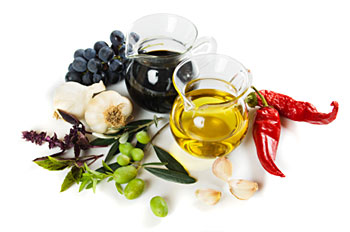
True balsamic vinegar is made from the Trebbiano grape and its rich brown color comes from aging in wood casks, often for decades. Although it is made from grapes, balsamic vinegar isn't produced from wine (as is wine vinegar). The authentic product may not contain any wine vinegars. The grape juice is simply reduced and then made directly into vinegar.
The closest that you will find to a "star rating" is by the consortiums of Modena and Reggio Emilia. They are the only guarantee of authentic aged balsamic vinegar, as both of these groups have strict rules of inclusion in the consortium as well as guidelines for vinegar quality.
The Modena consortium designates their products by bottling in a squat round bottle and one of two capsules to seal the cork. A white capsule indicates vinegar that is at least 12 years old and gold foil is for vintage vinegars—these have aged at least 25 years and carry the designation "extravecchio".
Reggio Emilla vinegars are bottled in a bottle with a long thin neck and have a round label to designate vintage. Red seals, like the white capsule, indicate at least 12 years of ageing. Silver are for 18 years and older and gold for those vintages of 25 years or more.
The thin product that is on most store shelves today is a manufactured by combining conventional white wine vinegars with colorings and flavorings.
As to your second question regarding olive oil, there are dozens of books written on how to select olive oil. The Italian Culinary Institute actually has a course on tasting olive oils that is modeled on wine tasting and there are even Olive Oil of the Month clubs.
Tuscan oils have traditionally been the gold standard for Italian olive oils and are, as such, the more popular. Because of the northern climates, Tuscan olives are picked before they are fully ripe giving them a young, herbaceous taste. It is the combination of that bright green flavor with a slight peppery finish that is most characteristic of these oils. (Sounds a lot like how oenophiles refer to wines.)
In the south of Italy the longer season offers an olive that can be fully ripened and is less bright and grassy in flavor. Traditionally the growers in the south sold overripe olives that were made into lesser quality oils. But many southern growers now finish and bottle their own oils.
Sicily produces excellent quality olive oils. Some of these are grown, pressed and bottled in Tuscan style, but the southern oils are generally softer in their flavor with mellow buttery characteristics.
Thanks for writing,
Timothy S. Harlan, MD, FACP, CCMS
Dr. Gourmet